
re:View – Some post-gig thoughts on Richie Sambora’s new album
Not too long ago I said that Richie Sambora’s new album Aftermath of the Lowdown was pretty good. That was after listening to it for two weeks.
Now I’ve had another two weeks listening time, plus the chance to hear most of the songs live at Richie’s gigantically awesome gig at the Empire in London. And I’ve got to tell you, this album isn’t only an incredibly good piece of music all the way through, it is also THE BOMB when played live.
For the fist couple of weeks it was just plain weird to listen to new Richie Sambora songs after spending the last 14 years listening to his older stuff. And I was basically listening to the old stuff permanently for the last 14 years… But by now, although I still feel that many of the songs from Stranger in this Town and Undiscovered Soul are somehow deeper lyrically, and also musically more varied and refined, I have to admit that Aftermath is probably the album with the most coherent identity overall. Where the old albums were dipping in and out of different styles – some of it quite Bon Jovi-ish, other parts very bluesy, and everything in between – Aftermath comes along in its very own, balanced style and just kind of flows perfectly all the way through.
I’m not saying that’s better or worse. I love Stranger and Soul for the emotional journey they take you through, from the epic blues-rock ballads to the uptempo, sing-and-jump-around rock songs, to the stripped-back, thoughtful and melancholic acoustic songs, and the beautiful poetry of Sambora’s lyrics from that era. But they’re not necessarily albums I listen to from start to finish a lot, because the mood can jump a lot along the way.
Aftermath seems more mature and polished in that respect – despite the changes in tempo and instrumentation, it has a very coherent mood throughout. Maybe it’s because the album was born out a particular phase in Sambora’s life. There’s ups and downs, cheerful and serious songs, but every piece of it seems to be anchored in reflections on that phase, in the person that emerged from this ‘lowdown’ (as he calls it).
And that, above everything, is what I love this album for. I may be completely over-interpreting it, of course, but then music is always what you make of it. And to me, Aftermath of the Lowdown says that my favourite singer/songwriter/musician, my musical hero if you like, has made it through his lowdown and is doing all right.
And after all these years, he’s still making some damn fine music – and he sure knows how to drive a crowd crazy.
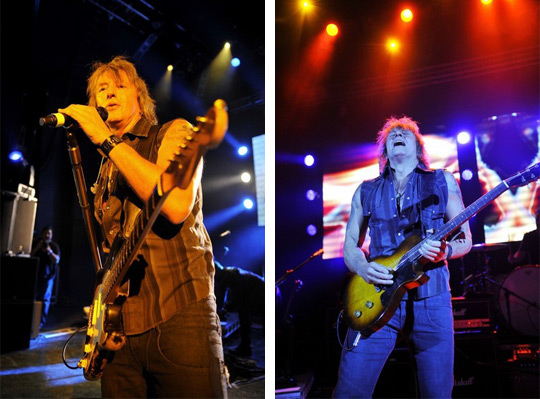
Images via Zimbio.

 Although Neverwhere had left me
  Oh-kay, weirdness alert. I wasn’t really sure about the whole Thursday Next series, but decided to give it a go after several friends recommended it. And I’m afraid it ends for me with volume one. Although the meta fiction thing grew on me about halfway through the book (when the actual plot finally kicks in after some over-indulgent introductory rambling), the concept behind it seemed just a bit too chaotic. Special detectives protecting our literary heritage? Cool. Real people and fictional characters jumping in and out of books? If we’re going that way, fair enough. A Nineteen Eighty-Four inspired setting? Well, if you must crush us with references, okay. It was when the time travelling came in that I got a bit of overload, and when it moved on to the vampires and werewolves, I finally had enough. It’s a shame that Fforde had to hopelessly over-clutter The Eyre Affair by cramming in every possible aspect of fantasy literature he could think of. Because the bit about moving between the real world and literary world would have been pretty awesome without all the rest annoying the hell out of you.
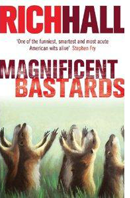 A collection of short stories from one of the funniest comedians around. From a dude in Montana who makes his money hoovering prairie dogs out of the ground, to a teenage girl who invites hundreds of thousands of MySpace friends to her house party, to the author of a business book entitled Highly Successful Secrets to Standing on a Corner Holding Up a Golf Sale Sign, this book is full of fantastically messed-up characters. And behind each story – most of which, admittedly, are a bit off weird – you discover the very touching truth of human encounters. And that’s what makes Rich Hall so good and so funny.
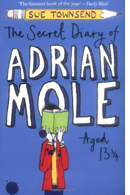 What can I say! Adrian Mole has been one of Britain’s favourite literary characters for decades, and finally I am one of his many fans. Sue Townsend is a complete genius, and not just because of her uncanny ability to get into the head of a teenage boy. It’s Adrian Mole’s entire world – from the early 80s West Midlands small-town life to the 90s Soho food renaissance – that makes these books such an unbelievably delightful read. To me, a German with a not very solid basis in British history who has spent the last four years trying to figure out this country, the Mole Diaries have been a most enjoyable lesson in recent cultural history. And I also very much wish I’d known Adrian Mole when I was a teenager, because it would have made being a teenager infinitely more bearable. I cannot tell you how much I love these books.
 Another German provincial murder mystery, part three of Rita Falk’s bestselling Franz Eberhofer series is mostly more of the same, which in this case means more hilariously entertaining micro-cultural comedy with a bit of a crime story in the background. To be fair, I probably only love these books so much because they are set around my home town and feature a whole range of characters and customs that could have been plucked straight off our road in the village. Most of the fun in this series is based on regional culture and dialect, so this one’s probably best enjoyed by German natives / native speakers, which means we can move right on to the next book.
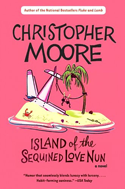 I had almost given up on Christopher Moore in the light of the recent, largely disappointing additions to my bookshelf. But then, just in time, along came Love Nun to sway my opinion of his writing back into more favourable regions. This is a great adventure, with a good story that’s nutcase enough to have you laughing out loud but doesn’t go completely off the rails in terms of the plot. A washed-out pilot stumbles onto a remote island, where a vaguely mental doctor and his evil wife are doing some not exactly ethical stuff with the cannibalistic natives under the guise of an old cargo cult. Much madness ensues. This could also make a fantastic movie, by the way.
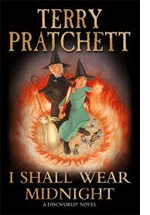 Oh wow, that was dark. Prattchet’s teenage witch has certainly grown up, and for a witch that means facing a whole lot more than puberty. This book made me realise once again why I love Pratchett so much: It’s comic fantasy, but there’s a balance, a kind of very practical-minded morality to it. With Pratchett magic’s not all sparks and glamour; it has consequences and requires sacrifices. And so I Shall Wear Midnight reveals that Tiffany’s dallying with her magical powers in the previous volumes didn’t only lead her into immediate showdowns with mythical enemies, but has also conjured up a much more complex force from a deep, dark corner of history – one that’s frighteningly human. Where there’s witches, there’s always people with a stake, and history tends to go in cycles and repeat itself. And with the ancient spirit of a powerful witch-hunter on the loose and turning her land against her, the stakes are high for Tiffany. Meanwhile, there’s still that issue with boys being idiots…
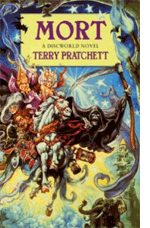 The idea of a mortal young man becoming Death’s apprentice / holiday cover and getting himself into all sorts of supernatural trouble certainly makes for an entertaining story. The style is very Pratchett, which is always a good thing. Sadly, aside from Death (who totally rocks on any appearance throughout Discworld), the characters just didn’t get to me. I didn’t massively care about their fate, which also means I wasn’t too bothered about the outcome of the story. Maybe it’s because of the main character, Mort, who’s just not very interesting. I had a similar problem with the male protagonist in The Truth – they’re both all right, but they’re just a bit flat. In contrast, all of Pratchett’s female characters I’ve come across so far have been multidimensional and complex, with contradicting good and dark sides, and very distinct quirks and attitudes. It seems to me as if Pratchett is putting a lot more attention into the creation of his female characters, embellishing their personalities with a massive amount of those feminine kind of details you don’t necessarily expect to ever even cross a man’s mind. Mort is still a good book though, just not one of those that I will remember for a long time.
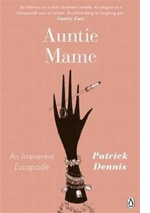 My little darling! Auntie Mame is one of the most dazzling characters I’ve ever come across in literature. Spreading her charms at the centre of this fictional memoir of a boy raised by his rich, eccentric aunt in 1920s New York, Mame is a socialite slightly ahead of her time, who turns her nephew’s life into a mad fairground ride with one outrageous adventure chasing the next.