Girl with a pen

…doing journalism. And stuff.

re:View - The 2011 bookshelf, part 3

6 Jan2012

Well, this has certainly been my discovering Pratchett year. I fell in love with Discworld after a friend gave me The Wee Free Men and A Hat Full of Sky (both reviewed in part 1), and once I’d got hooked on the magic there was just no stopping. I particularly love the witches, so I went with their storyline for my first proper exploration of the Discworld universe…and then spent the rest of the year reading mostly Pratchett as well. So here we go, the third and last part of my epic 2011 book review.

I Shall Wear Midnight
by Terry Pratchett | amazon (UK)

Oh wow, that was dark. Prattchet’s teenage witch has certainly grown up, and for a witch that means facing a whole lot more than puberty. This book made me realise once again why I love Pratchett so much: It’s comic fantasy, but there’s a balance, a kind of very practical-minded morality to it. With Pratchett magic’s not all sparks and glamour; it has consequences and requires sacrifices. And so I Shall Wear Midnight reveals that Tiffany’s dallying with her magical powers in the previous volumes didn’t only lead her into immediate showdowns with mythical enemies, but has also conjured up a much more complex force from a deep, dark corner of history - one that’s frighteningly human. Where there’s witches, there’s always people with a stake, and history tends to go in cycles and repeat itself. And with the ancient spirit of a powerful witch-hunter on the loose and turning her land against her, the stakes are high for Tiffany. Meanwhile, there’s still that issue with boys being idiots…

Read it? Yes. And read the other three first!


To Kill a Mockingbird
by Harper Lee | amazon (UK)

I’m quite embarrassed to admit that, despite studying American Literature, I never actually read To Kill a Mockingbird, until last year. But I’m finally catching up on all the books I didn’t have time to read at uni…so better late than never, as the saying goes. To Kill a Mockingbird is, withouth a doubt, a very important book (it certainly was for its time but I think it still is today), and it’s also a huge pleasure to read. The contrast between the grim subject and the child’s point of view has such a massive impact on the reader. And no matter how infuriating and depressing the story gets, the young narrator’s innocence again and again lifts it up and gives it a strange sense of hope. A beautiful classic.

Read it? Yes, and don’t leave it as late as I did!


Equal Rites
by Terry Pratchett | amazon (UK)

As the title suggests, this is essentially Pratchett on equal opportunities. In line with tradition, a dying wizard chooses his successor by passing on his staff to the eighth son of an eighth son (that is, a child destined to become a wizard). But, being in a bit of a rush, the old man forgets to check one essential detail, and the eighth son turns out to be a daughter. When the girl Eskarina grows and starts to show uncontrollable powers, head witch Granny Weatherwax decides she must be off to the university to learn how to use her skills. Trouble is, only wizards - as in, men - are allowed in the university, while girls can only train for witchcraft with a village witch. So the fine gentlemen of the university won’t have it. Naturally, Granny won’t be stopped by a door slammed in her face (especially not if a wizard is doing the slamming) and applies female ingenuity to the problem. Cue a load of magic-ing around the issue of gender equality, and a big showdown of Granny vs The Old Boys. Meanwhile, a whole new kind of magic is about to be discovered…

Read it? Yes! Along with the rest of the Granny Weatherwax saga!


Wyrd Sisters
by Terry Pratchett | amazon (UK)

Shakespeare gets a Discworld makeover in this spoof of the classic court tragedy. Some evil duke kills the king of Lancre and takes his place. Everybody in the tiny kingdom kind of knows it, but they’re too terrified to do anything about it. The witches of the land - Granny Weatherwax, Nanny Ogg and newbie Magrat Garlick - aren’t happy about all this, but the unwritten codes of tradition forbid them to meddle with royal politics. To which the witches can only say a very hearty “sod it”, and the magic meddling with the duke’s evil schemes begins. Shakespearean theatre traditions and playwright-ship get their share of comic attention in this book, but Pratchett also goes on a thoughtful excursion into the workings of propaganda and the power of words. Wyrd Sisters is magical on every level. It’s also the first Discworld book to bring the eccentric coven around Granny Weatherwax and Nanny Ogg to life, and for this alone it deserves a place on every bookshelf.

Read it? Big Yes. So big it deserves a capital Y. Halfway into the first page, you’ll already know why.


Witches Abroad
by Terry Pratchett | amazon (UK)

And here we have my favourite Discworld novel. Pratchett turns on the classic fairy tale, so of course this can only end in hysterics. Magrat (the newby witch of the coven) inherits a wand from a fairy godmother, along with an obligation to go and sort out some poor girl’s fate on the other end of the Disc, and of course Granny Weatherwax and Nanny Ogg don’t pass up the opportunity to go travelling. Granny and Nanny on their first big journey abroad is possibly the funniest thing I have ever read. So for most of the book it’s grannies on a holiday: Of course they can’t be having with the strange traditions (and the strange food!) of the foreign folks, and consequently leave behind a trail of chaos and bewilderment. In the end, their journey leads them straight into the big showdown of good fairy godmother vs evil fairy godmother, because the poor girl is about to be married to the prince, and naturally this has to be prevented by any means possible. (It’s Pratchett, what were you expecting!) A brilliant, hilarious and magical fairy tale travelling adventure across the Discworld!

Read it? Yes, yes, yes. It’ll have you in stitches.


Lords and Ladies
by Terry Pratchett | amazon (UK)

This was a weird one. There seems to be quite a surge in darkness from the previous books about the Lancre witches. That’s mostly because of the bloody elves. If you’re not familiar with Discworld, let me just say they’ve got some sick fairy folk there. Pratchett’s elves aren’t all cute and sparkly. More like, terrifying and totally deadly. Every now and then, they come from their parallel universe into the real world and cheerfully butcher the good people. And this time, in a Pratchettian spoof of A Midsummer Night’s Dream, the queen of elves decides to take over the real world by marrying the king of Lancre. He’s just about to marry junior witch Magrat Garlick, who isn’t impressed and consequently morphs from soppy flower-child into axe-wielding Amazon. The senior witches Weatherwax and Ogg aren’t too happy either about the elvish monsters infiltrating their little kingdom, so measures need to be taken… This is one of the few Pratchetts I enjoyed but didn’t like. It’s a good story, entertaining, funny, with all the action and suspense and everything. But those elves just completely freaked me out. They’re not even the good kind of creepy, they’re just like something slimy that crawled out from your worst nightmares.

Read it? Meh.


Maskerade
by Terry Pratchett | amazon (UK)

It’s the Phantom of the Opera, discworldified! I should probably add here that Phantom has been my favourite musical in the world ever since I was about six years old. So I was quite disappointed that Maskerade didn’t deliver what I’d expected from a Pratchett spoof. There are some good spoofy elements, but overall it’s lacking bite. Except for that bit where Granny Weatherwax gets a bit carried away with getting all glammed up for the opera. That, admittedly, had me laughing out loud for a while. Other than that, it’s a somewhat lukewarm maskerade dotted with fragments of a ghost story, a good dose of primadonnas and ballerinas, and the occasional sharp observation about the showbiz folks and their ways. Pratchett vs Phantom didn’t have me on the edge of my red velvet seat, sadly.

Read it? If you’re interested in the world of musical theatre, you’ll probably find it moderately entertaining. Otherwise…nah.


Carpe Jugulum
by Terry Pratchett | amazon (UK)

The vampires are loose in Lancre! And with everybody else turning into mindless puppets under their influence, it’s up to the witches to sort the suckers out. Overall it’s pretty much your traditional vampire story, and sadly the vampires are surprisingly predictable for a Pratchett. And that kind of ruined it a bit for me - well, for the vampire part anyway. But as soon as the witches really get going (about midway through a slightly too long book) the usual Pratchett brilliance kicks in again. At first I wasn’t too sure about the whole Granny-Weatherwax-in-a-crisis-of-faith kind of angle, but it does get incredibly deep, especially after a bloodsucker’s bite sends her into a dark, ugly struggle for her life and soul… [*] So, after a bit of a slow start, and with the reliably fantastic witches making up for the somewhat toothless vampires, it’s pure, perfect Pratchett once again.

Read it? If you like vampire stuff, or if you like Pratchett, it’s a must.


The Stupidest Angel
by Christopher Moore | amazon (UK)

The subtitle tells me it’s a heartwarming tale of Christmas terror. Except it’s neither heartwarming (zero emotional engagement with the characters, even though some of them are dear old friends from the Pine Cove series), nor does it contain any terror. For about the first half, nothing happens at all. Then there’s a random occurrence of zombies and some brain eating, none of which makes much sense, caused by nitwit Archangel Raziel (yes, the same nitwit Raziel who was already a complete menace in Lamb). You may think now, a-haah, zombies! Great! Terror! But, no. As soon as the brain eating action brings some life into this lukewarm story, Raziel snaps his fingers and the entire story un-happens. So in the end, nothing has actually happened at all. Not that it matters, as everything that didn’t actually happen at all is completely fruit bat shite anyway. If none of this makes any sense to you now, then I have succeeded in getting across how utterly pointless this book is. I’m rather sad to say this, but Christopher Moore has clearly lost his mojo and is now merely trying to cash in on his previous works with some low-effort recycling of old characters. What a cheat.

Read it? Don’t waste your time and money on this one. It’s the stupidest Christmas book.


Hogfather
by Terry Pratchett | amazon (UK)

Now here’s a Christmas story to blow your stockings off. (Sorry.) The Hogfather (the Discworld’s Santa) has been…er, removed, and the entire system of belief on the Disc has been thrown into chaos. While Death, glad for a break from his day job, dons a red robe and tries to get the hang of the Ho Ho Ho, his granddaughter Susan (the ultimate kick-ass goth Mary Poppins), along with assorted minor gods and fairies that suddenly spring into existence wherever somebody imagines them, tries to bring the Hogfather back from a fantastic world of the imaginary. Aside from one of the most sparkling appearances of Death ever, this book also has an incredible depth to it, looking at the idea of belief and why it’s so essential to being human. It’s comic and thoughtful all at once - so basically Pratchett at his best!

Read it? Oooh, yes! But save it for next Christmas - it’s a perfect festive treat for the holidays.


Well, that’s it for 2011. Resolutions for the new year: Read more Pratchett, more American classics, more Bavarian country murder mysteries…well, just more books.

* [SPOILER WARNING] … Which ends with the most epically awesome defeat of a headvampire ever, in the history of the world: “I ain’t been vampired. You’ve been Weatherwaxed.” Go Granny!

A sad day for Rock

22 Oct2011

Oh heavens.

It’s Rock Week on The X Factor. Well. Er, ‘rock week’. So far nobody really seems to have grasped the concept of rock music.

But you know the music industry is in a bad state when a member of Take That tries to explain to a member of N-Dubz what rock is…

Ahem.

…defining it as:

“It’s not a pop song with a guitar stuck on it.”

I can hear a lot of turning in graves going on right now.

Posted under: iRant
Tags:
Leave a comment

One million reasons to not watch The X Factor vs.
the one reason to watch it this year

17 Oct2011

Under normal circumstances, you wouldn’t find me within a mile of a TV set showing The X Factor or one of its similarly idiotic clones.

I say “under normal circumstances” because, although I passionately despise mass-produced pop music and the artificially made pop stars that generally serve as a vehicle to its producers, with the start of this year’s X Factor series, special circumstances seem to have arisen:

Janet Devlin.


Janet Devlin at her X Factor audition (before that awful makeover where some idiot stylist smoothed out her beautiful hair)

It’s a shame, really, that she’s having to try to get signed via the Simon Cowell machinery which - should she win - will probably land her captivating voice on an album full of soul-less production-line pop songs that will be heard and forgotten as soon as the Christmas sale is over. Because this incredibly talented, elf-like and utterly likeable young woman deserves a career of making her own music and being her own, beautiful self.

I sincerely hope that, no matter what the Cowell Commercialisation Cult churns out this time, Janet will be able to “get there” and be a successful artist on her own terms.

Check out the audition video and you’ll see what I mean.

And due to these special circumstances, I’m now spending my Saturday evenings watching a programme I’d vowed I would never support, and spending 35p a week on text vote.

Well. I’m a sucker for a good voice.

Why you’ll see me starve before you’ll see me working for a women’s magazine

4 Oct2011

Spotted this morning on the train, in some women’s magazine (a weekly of the celebrity / gossip kind I would guess from the tasteless design) in a young woman’s lap.

On the left-hand page of a spread: Advertorial recipe feature promoting luscious-looking cupcakes.

On the right-hand page of the same spread: Huge red headline for the crash diet feature “Lose 5lb in one week!”

I’m not even going to go into the whole screwed-up body images and imposed beauty norms kind of stuff.

But still, I’m just as puzzled by the question how any editor with a shred of integrity can sign off such a spread as I am amazed that there are actually thousands of women out there who are willing to pay money to put themselves through the self-imposed emotional torture that these magazines promote.

re:View - The 2011 bookshelf, part 2

27 Aug2011

It’s time for another round of book reviews. Same idea as before. In the second half of the year, I’ve moved on from reading mostly Moore and Pratchett to some American classics (and some that will certainly find their place among the new classics), some randoms, and - okay - some more Pratchett.

So, here’s the bookshelf from June to August. I’m determined to go through with this until the end of the year, so there will probably be another round or two later on. Some of the books I read recently have reminded me how much I used to love American literature. So expect some more of that. And feel free to make recommendations in the comments.


Mort
by Terry Pratchett | amazon (UK)

The idea of a mortal young man becoming Death’s apprentice / holiday cover and getting himself into all sorts of supernatural trouble certainly makes for an entertaining story. The style is very Pratchett, which is always a good thing. Sadly, aside from Death (who totally rocks on any appearance throughout Discworld), the characters just didn’t get to me. I didn’t massively care about their fate, which also means I wasn’t too bothered about the outcome of the story. Maybe it’s because of the main character, Mort, who’s just not very interesting. I had a similar problem with the male protagonist in The Truth - they’re both all right, but they’re just a bit flat. In contrast, all of Pratchett’s female characters I’ve come across so far have been multidimensional and complex, with contradicting good and dark sides, and very distinct quirks and attitudes. It seems to me as if Pratchett is putting a lot more attention into the creation of his female characters, embellishing their personalities with a massive amount of those feminine kind of details you don’t necessarily expect to ever even cross a man’s mind. Mort is still a good book though, just not one of those that I will remember for a long time.

Read it? Depends on how big a Pratchett fan you are.


The Brief and Frightening Reign of Phil (Includes the
In Persuasion Nation Collection)

by George Saunders | amazon (UK)

This is certainly not a book I would have chosen for myself, but The Boyfriend recommended it gently (by putting it right on top of my Stack of Books I Really Must Read). I found myself rather alienated by Saunders’ style at first. Which is probably why I didn’t massively enjoy the first story, The Brief and Frightening Reign of Phil, even though I thought it was really well observed and well written. But while reading through the rest of the stories in the collection, I got used to Saunders’ world and his characters, and once I became familiar with people with arms sticking out of their foreheads, talking corpses, self-castrating dog puppets and products from commercials flying around on a mad rampage, I more and more enjoyed the book. Although rather bizarrely cast, all the stories are very human at their core; they are deeply thoughtful and packed with some very uncomfortable truths. Saunders’ distorted American landscape is as disturbing as it is familiar. The In Persuasion Nation collection really got to me and made me want to read not only more Saunders, but also more contemporary American short stories.

Read it? I very much recommend it.


Wintersmith
by Terry Pratchett | amazon (UK)

Number three in the Tiffany Aching series is a reunion with old friends - the teenage heroine, the witches, and of course the wee fairy folk. This time, Tiffany stumbles into the dance of the seasons (quite literally) and gets herself in trouble with Winter himself, in the process slowly morphing into the summer goddess. It’s an exciting story, darker than the previous ones and yet delightfully funny. What’s so good about these young adult fantasy stories is that they are essentially magic minus the marketing, swapping the Harry Potter-style spells and special effects for a more sober view of the subject of witchcraft and magic. In Tiffany Aching’s world, a witch isn’t a popstar. She may have fantastic skills and superior knowledge, but she spends her days caring for the old and the sick of her village, and the nights out in the snow searching for lost lambs. Her work is hard and dirty, and although people come to her when they’re in need - of anything, really - she will be the outsider, never fully trusted or appreciated. But her magic is the kind that makes sense: It doesn’t need Latin catchphrases or sparkly wands; it’s just human nature, the wisdom passed on through generations, and a bit of mysticism. And yet, Tiffany Aching would totally kick Harry Potter’s sorry ass any time. (But I bet even a Feegle alone could knock him out.)

Read it? Yes. In fact, read the whole series!


The Help
by Kathryn Stockett | amazon (UK)

In a fictional take on the history of racial segregation in the US, The Help offers a touching account of the lives of women in early 1960s Mississippi. Black maids are raising white people’s children, but aren’t allowed to use their bathrooms. In the midst of the racial tension in the town of Jackson, one free-thinking white woman crosses the boundaries and publishes a book of maids telling their life stories of working for white families, which causes as much outrage as it reveals unexpected truths. The subject here certainly isn’t new, and there have been other books telling of the injustice, cruelty and suffering in a segregated community with much more devastating examples. What I did like about this one, though, was the angle and the balance it strikes. Stockett doesn’t take a full-on “black people suffering under the tyranny of whites” approach. Instead she divides the book between three narrators – two maids and the woman writing their story – and shows the good and evil on both sides of town, among the white folks as well as in the black community. Of course this includes tales of oppression and pointless cruelty. But there are also stories of respect, compassion and love between employers and maids. The result is a multidimensional account of complex relationships that draws a compelling picture of life in the time, on both sides of the dividing line.

Read it? It’s a good book, but very focused on the women’s angle - so I’d say mostly one for the girls.


The Catcher in the Rye
by J.D. Salinger | amazon (UK)

Oh well. It’s a classic, and it’s been on the reading list of every Anglo/American literature class I have taken since my final school year and all the way through university. So I figured that after dodging the book for so many years, and while it was conveniently available on The Boyfriend’s (now our combined) bookshelf, it was about time I read it. For the first third or so, I honestly only stuck with it because, given my background as a student of American literature, I would have been ashamed to admit to giving up on it. Meanwhile my annoyance with the character, the writing and the general fuss around this book grew. And then it somehow got to me. The mind of Holden Caulfield drew me in and I could hardly put the book down. I don’t know why; I couldn’t even say that I much enjoyed reading it. But there is something rather hypnotic about his anger. And weeks after finishing the book, I still have it going round my head quite a bit. I guess I get it now what the big fuss about this classic is all about.

Read it? It’s a pain, but worth it.


Vernon God Little
by DBC Pierre | amazon (UK)

What a blockbuster of a book. The first one in a long time that had me on the edge of my seat until the last few pages, reading through dinners and people’s attempts to strike up a conversation with me. In an equally funny and scary story about the influence of the media, the only surviving witness of a school massacre in a Texas small town falls into the claws of a dodgy reporter on a mission to turn the events into a national reality TV franchise. With the real killer dead among the victims, the police, the outraged townsfolk and the headline-hunting media turn on survivor Vernon for a scapegoat. By the time the innocent teenager realises the trouble he is in, one ruthless reporter has already manipulated the entire town in constructing a case against him, sending Vern on a crazy escape to Mexico that leads straight to death row. It’s a big, bold story, but it’s the kind of story we read about in the papers at least once a year. The media closing in on a convenient target, the meddling with facts and the manipulation of everyone from your own mother to the jury and a nationwide TV audience - it all just sounds too familiar. And although the plot may seem a bit Hollywood-esque at times, this makes the story feel very real, and that freaked the sh*t out of me.

Read it? Oh yes. It’s awesome.


The Second Coming
by John Niven | amazon (UK)

It’s a 21st century style New Testament. God returns from a long-ish holiday (Renaissance to present, to be precise) and isn’t exactly amused by the state of Earth and the attitude of his human creations, so he decides to send Junior back down to clean up the mess. In today’s America, of course, nobody gives a damn about a fanatic preaching the kingdom on a street corner, so Jesus - a naively good-matured hippie and divinely talented musician - needs to pull some desperate measures to get his message out there. The solution arrives in the shape of talent show American Pop Star, and soon the lamb is being set out for sacrifice again.

It certainly is an unusual take on the life of Christ - a swearing, pothead holy father and son take some getting used. The style Niven chose to tell his story is rude and at times tasteless; he exaggerates and provokes. But this is vital in getting the message across, and the book does so with a good deal of irony and comic relief. Many reviewers say, stay away from this book if you’re religious because it will massively offend you. But I doubt they’re on about the f-words and the joints. What Niven does, mostly, is hold up a big, bright mirror into the faces of all the right-wing Christians and the hypocrite religious fanatics who trek to church every Sunday but snub on the homeless people on their streets, or rally against homosexuals in the name of the Lord. If you get the message of this book, you know that the critics who cry loudest can only be the ones who recognise themselves in there. To all those who cry “outrage”, I can only say: If you’re honest in your beliefs, you’ve got nothing to be offended about here. Because more than anything, this book is a reminder of the very basic Christian message; the only thing that 21st-century Jesus really wants to get across to people before they nail him to the cross again: Just be fucking nice to each other.

Read it? It’s as sad as it is uplifting, it’s clever, it provokes, and it’s a fantastically funny read.


Pastoralia
by George Saunders | amazon (UK)

In this book of short stories, similar in style to the In Persuasion Nation collection, Saunders again holds up a mirror to our civilisation – one that you can’t help but face, no matter how disturbing the images may be. Although he casts a layer of fantasy on the real world, a kind of filter that makes everything feel distinctly out of order – whether it’s normal people living 24/7 as cavemen in a theme park attraction, or the corpse of everybody’s favourite aunt terrorising her family while slowly decomposing on the sofa – the human truths shine through with an urgent sense of reality. As with the first Saunders book I read, I was captivated by the narrative and the characters, even though they annoyed the hell out of me. I’m not sure why, but it might have to do with the fact that many of Saunders’ characters don’t think and speak in perfect literary prose. They are products of their backgrounds; some are smart and fortunate, some arrogant and self-centered, some uneducated but hard-working, some just a bit stupid. Their language, the spelling, grammar and syntax, is all over the place; it’s real. All these characteristics make them very much like people you meet every day. And despite the distorted, often nightmare-ish physical and emotional landscape that they are set in, this makes the whole thing disturbingly real.

Read it? It’s brilliant. If you don’t mind a whole lot of uncomfortable truths being flung at you.


You’re an Animal, Viskovitz
by Alessandro Boffa | amazon (UK)

What a strange and clever little book. A series of short fables sees Viskovitz (a human spirit for all you can tell) reincarnating up and down the evolutionary chain. Under the loose plot of Visko’s tireless quest to conquer his ever elusive true love, each incarnation explores an essential human experience - the search for identity, life in a community, love and longing, the struggle of good vs evil, or simply the question of point of our existence. On the literal side the fables can get a bit too scientific at times - annoyingly so if you don’t happen to be familiar with the scientific terminology around, say, every cell in the body of a snail. But the metaphors are thoughtful and the writing is entertaining in its range from tragic to comic, so the book overall makes for a very rewarding read. If you ever wonder how we made it from the cell in the sea to the species we are today, and what the point of it all is - well, this book won’t give you all the answers, but it offers many original and entertaining thoughts about the part we play in the evolutionary game.

Read it? It’s a quick read, and it’s brilliant.


Her Fearful Symmetry
by Audrey Niffenegger | amazon (UK)

What a disappointment. When I was halfway through the book and still nothing had happened, really, I decided not to waste any more time on it. Aside from telling us every three pages, on average, just how symmetrical the twins in question are (because we probably didn’t get it the first ten times it was mentioned, or while reading the entire chapter dedicated to their symmetry early on in the book…) the story is mostly a history and tour guide of Highfield cemetery, with some popular literature-style waffle about love and loss sprinkled on top. The characters are flat and boring; once established they don’t develop at all. Even the bereaved character’s grief for his dead lover is shallow and completely void of emotion. And the ghost, frankly, is the most stereotypical accumulation of ghost story cliches that anyone can possibly think up. I don’t get all the fuss about the author. Sadly, like so many works by ‘bestselling’ authors these days, this book has no point, lacks substance, and is written in the most simple, un-challenging style and language - very obviously a product created to appeal to a mass audience.

Read it? Seriously, don’t waste your time.

How to make Girl with a Pen’s day 100% better

1 Aug2011

One easy step: http://pausefacescully.blogspot.com/

I can’t begin to tell you how delighted I was to find this blog. Not because of the images - I have at least 10 screenshots of Scully from every episode*, and better ones too. But it’s quite reassuring to know that I’m not the only nutcase out there who stops and screenshots her X-Files DVDs every few minutes purely for the enjoyment a trademark Agent Scully Face.


Click here to view in full glory size

Now stop looking at me strange. Everybody is entitled to a little obsession in life. Or three.

* Or at least I had, until some fucktard junkie broke into my flat and stole my laptop along with everything else that was worth a penny…

Masterchef, in a nutshell

30 Jun2011

Gregg Wallace and John Torode do the Buttery Biscuit Base rap. Because we all know that in the end, it all comes down to the pudding, really.

I think this is actually my favourite new song of the year.

Posted under: WebTV
Tags: ,
Leave a comment

re:View - The 2011 bookshelf, part 1

15 Jun2011

I like lists. I like to keep track of things. I hate it when somebody asks me which books I have read recently, and I know that there are some great titles somewhere at the back of my mind that I could shout out - but when I try to remember the author’s names, the covers, stories and characters, my fuzzy brain mashes everything up into a big blob of literary goo while I try to get hold of any one title that I could pull out of the mess.

Therefore I have embarked upon the attempt to remember all the books I’ve read this year and write down a few thoughts about them. Just to keep everything neat and organised. Of course this is only part one becuase there’s a whole lot of year left, and I have got a load of books on my wish list for the second half of 2011.

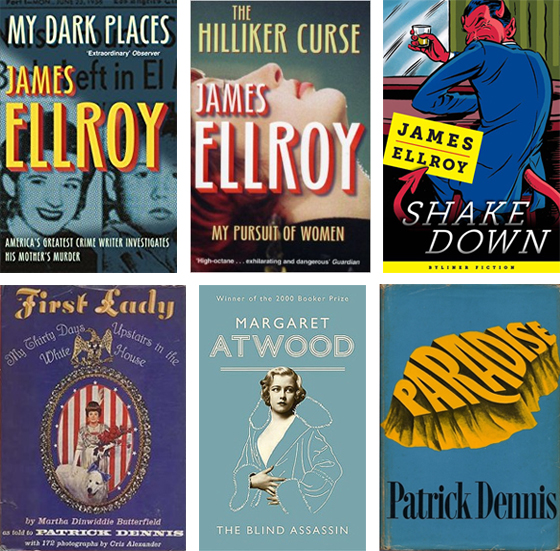
Auntie Mame: An Irreverent Escapade
by Patrick Dennis | amazon (UK)

My little darling! Auntie Mame is one of the most dazzling characters I’ve ever come across in literature. Spreading her charms at the centre of this fictional memoir of a boy raised by his rich, eccentric aunt in 1920s New York, Mame is a socialite slightly ahead of her time, who turns her nephew’s life into a mad fairground ride with one outrageous adventure chasing the next.

Told in the author’s sarcastic, down-to-earth voice, Mame’s airy, naively radical ideas and attitudes turn into comedy of the finest kind. But Dennis’ very detailed observations of the fashion, the mindsets and the manners of the time add a distinct shine to the slapstick, sweeping you up in a sensation of the glamour and luxury of an era that you’ll find yourself struggling to step out of again. This book is an exquisite treat - it’s that feeling of eating a whole box of fancy chocolates that you know you can’t afford.

Read it? Yes, yes, yes!


Around the World with Auntie Mame
by Patrick Dennis | amazon (UK)

Auntie Mame is back, and she’s ready to get scandalous. In the second volume of Patrick Dennis’ fictional memoir of a boy growing up with his super rich, super elegant, super crazy aunt, the narrator reminisces about his travels with Mame during the 1930s. From Europe to Communist Russia (a brilliantly satirical chapter that was censored from the original 1950s release for being too risky), to the Middle East, Mame travels on a trail of scandalous social engagements, disastrous romance and neck-breaking adventures.

I highly recommend reading both books in sequence. The second volume benefits greatly from all the scenery and characters that have already been established so vividly in the first book, while at the same time adding new dimensions in the form of different cultural playing fields as well as a more mature and critical voice of a narrator now in his early twenties. By the time you have finished reading the second book, you’ll be completely in love with Mame and her world.

Read it? Absolutely.


Winterkartoffelknödel
by Rita Falk | amazon (DE)

One for the German(-speaking) readers. I don’t normally read murder mysteries, but this one was given to me as a present by a friend from home. It’s a sort of comedy murder mystery set in and around my hometown in lower Bavaria. Now, this isn’t exactly high literature, or even a particularly clever murder mystery. But what I found brilliant about this book is how closely it portrays the particular language and way of life in a very small area of the country. And I’m not talking about the culture and language of Bavaria as a region. This book gives you the very detailed quirks of the Bavarian dialect and the culture of just one town and a few surrounding villages - the kind of stuff that is so regional and specific that it won’t even apply to the next town 50km down the motorway. You probably need to be from the area to fully enjoy the authenticity of the writing and all the references. To me every single character in this story was real, as if taken directly out of my street at home. But if you’re not from the area, you’ll probably still roll around laughing, because this ‘provincial thriller’, as it calls itself, is one of the finest examples of micro-cultural comedy I’ve come across in a long time.

Read it? If your Bavarian is good enough to handle it!


You Suck
by Christopher Moore | amazon (UK)

Let me get one thing out of the way first: I am a bit of a Christopher Moore fangirl. He’s great for quick, effortless entertainment and big laughs. A lot of his humour is based on observations of identities - how we construct them as well as how they are perceived - and he never seems to run out of imaginative, weird and immensely funny language. Most of all, I love that all his characters are normal everyday people, yet they all have their obsessions, their quirks, their secrets and their little sparks of madness, which makes them very authentic and can also be quite reassuring if you tend to feel like you’re the weird one in your world.

You Suck is the second part of the love story series telling the (after)life story of Jody, newly-turned vampire, and her minion / lover Tommy, as they try to figure out how to live like proper creatures of the night in Moore’s lively San Francisco universe. The second part of the story introduces a host of new characters, most notably teen goth-punk-emo girl Abbey, who is desperate to become a vampire, writes the most hilariously tormented diary entries ever published, and is responsible for most of the laughs. Naturally the book also features the various assorted components of a good vampire story, including the cops with stakes, the evil über-vampire, the geeky scientist… oh, and a giant shaved vampire cat.

Read it? If you’re sick of the sappy vampire romance franchise and missing the times when vampire stories were crazy and fun, this is your book!


Bite Me
by Christopher Moore | amazon (UK)

More of Moore’s love story series. This final part wraps up the storyline of vampires Jody and Tommy, their minions, friends and enemies. The story has a bit of the “tying up loose ends” feel to it and isn’t quite as rich and exciting as the first two parts. But if you’ve read the whole series, this one feels like spending a bit more time with old friends. And while Jody, Tommy, Abby & co face their final battles that will decide which on which side of the darkness they’ll spend their lives, the San Francisco universe Moore has created over the years comes alive more than ever. And of course it’s all still good fun, action-packed slapstick, and the usual witty banter.

[It gets a big minus for the shit cover though. What a disgrace that, after all the great, ironic cover designs of Moore's previous books, they decided to go with the effing Twilight/True Blood crap for this one. Booh.]

Read it? It’s probably only worth it if you’ve read at least one of the previous volumes.


Good Omens
by Terry Pratchett and Neil Gaiman | amazon (UK)

According to the Nice and Accurate Prophecies of Agnes Nutter - the world’s only totally reliable guide to the future - the world will end on a Saturday. Next Saturday, in fact. Just after tea…

Forget everything you thought you knew about the Armageddon, and prepare to be taken for an apocalyptic ride. And prepare to be laughing hard.

I had never read Pratchett (or Gaiman) and I mostly read Good Omens because The Boyfriend strongly recommended it. (And partly because I do love a good funny turn on Christian religious material of any kind.) This is probably the kind of book I have to read two or three times to get a chance to enjoy everything that’s in there.* The amount of imagination, clever twists of the familiar, and hilarious unexpected comments quite overwhelming - in the best possible way. Every paragraph of this book is so packed with details, observations and new interpretations of what you thought you knew, that it does require a fair bit of attention to get the most out of it. But the genius lies in the little details, as do the laughs (and there are plenty), so the extra minute spend on a page, or even a footnote, will be massively rewarding. One of my new favourite books of all times.

Read it? YES! If you read one book this year, this is it!

*The footnotes alone probably deserve a full read.


The Truth
by Terry Pratchett | amazon (UK)

This is the first Discworld novel I’ve read, so I can’t really rate it in the context of the overall saga. But I don’t have to be the hundred millionth person to tell you that Pratchett is an absolute genius, because that’s a fact and everybody knows it. The Truth wasn’t necessarily the book that made me fall in love with Pratchett’s writing, but nevertheless this story about the birth of printed news and the first newspaper in Discworld has been an absolutely delightful read.

If you come from a publishing background (as I happen to) and have studied journalism to the point where each story, each headline, each word gets deconstructed, rewritten, subbed, and rewritten again, you will most certainly find yourself in very familiar company on pretty much every page of this book. With great insight, surprising detail and a good deal of topical humour, Pratchett exposes the true nature of publishing with all its brilliance and weaknesses. This should be compulsory reading for any student of journalism across the country!

Read it? If you have anything to do with journalism, publishing or the media, or if you just like to keep up with the news in general, I bet you’ll love it.


Practical Demonkeeping
by Christopher Moore | amazon (UK)

When I decided to read Christopher Moore’s first book, I somehow expected it to be his funniest. You know, something fresh and original, created before the new author gets sucked into the commercial publishing machine and starts churning out mass-manufactured replica of his first success.

But compared to Moore’s later books, Practical Demonkeeping seems to lack maturity and courage - it feels as if the author was testing the waters that he would fully plunge into only later in his career. His greatest skill - the clever observation of personalities and identities - already comes through here: The delicate portrait of an array of weird yet familiar characters in the sleepy coastal town of Pine Cove, California, is the real attraction in this book. The actual story - an ancient demon that spent the millennia getting summoned, wreaking havoc, and getting banned again currently happens to be on the loose in Pine Cove - is mostly secondary. The demon, although quite dangerous and rather chatty, is neither scary nor funny, but mostly a general annoyance that keeps getting in the way of the entertaining little storylines of the various minor (but much more exciting) characters. Not the greatest Moore of all times. In fact, probably the weakest Moore I’ve read.

Read it? Skip this one and go for one of his later books.


Lamb: The Gospel According to Biff, Christ’s Childhood Pal
by Christopher Moore | amazon (UK)

Probably the Moore novel I had the highest expectations for: The New Testament, re-told by the master of modern literary pisstaking. But Lamb was probably the unfunniest Moore I’ve ever read, and it wasn’t anywhere near half as funny as the average Bible parody. The ratio of the fun bits to the massive volume of (largely unnecessary and pointless) storyline didn’t really work in entertainment’s favour. Starts promising, becomes tedious quickly, ends on a bit of an anticlimax. However, if you enjoy random appearances of monsters, Chinese concubines, Kung Fu monks and the Yeti - and are now wondering what the hell they have to do with the Messiah’s life story - you might find yourself mildly amused by this book.

Read it? Don’t bother.


The Lust Lizard of Melancholy Cove
by Christopher Moore | amazon (UK)

Moore returns to the scene of his first hit: the coastal small town of Pine Cove, California, filled with weirdos, hippies, and the occasional nutter. This time, the town is in slightly more distress than usual - mostly because the town psychiatrist has decided to take some twelve hundred patients off their antidepressants; and partly because an ancient 50-feet sea monster has decided to stop by for a while.

It doesn’t improve matters that the sea monster, Steve, has the pre-evolutionary ability to cause everyone to become a bit, er…hormonal, likes to mate with explosive objects, and has taken to snacking on the unsuspecting inhabitants. In the end it’s down to the pothead town constable, Kendra the (retired) Warrior Queen of the Outland, a sea mammal-o-phile and a blues man to save the Pine Covers from becoming fish food. Lust Lizard is probably my favourite Moor novel outside of the San Francisco universe. His second take on the Pine Cove universe is a lot bolder, and a lot more fun than his debut novel Practical Demonkeeping. The characters are delightfully crazy, the storyline makes sense (as far as thousands-of-years-old sea monsters go) and the whole thing is just one big, exciting, ridiculous adventure.

Read it? It’s a must if you enjoy a random comedy trip into weirdo-land!


The Curious Incident of the Dog in the Night-Time
by Mark Haddon | amazon (UK)

Certainly not quite your average book for young readers, or any readers, The Curious Incident has left me a bit divided. The idea of a murder mystery-slash-family drama told from the perspective of a teenager with Asperger’s Syndrome is definitely intriguing. I can’t say I massively enjoyed the book, though. But at the same time I thought it was pretty good and cleverly done. The weird thing about this book is that it didn’t move me - in a strangely moving way. The dramatic story is there, but it just doesn’t grip you. But that’s the whole point of this book, I suppose, seeing as the author is trying to make us understand the perspective of someone affected by Asperger’s. And from what I’ve heard reviewers say, he is doing so quite well. So, technically, it is a really good book, and it is an interesting read. Maybe my problem with it is just that I like books to draw me in and touch me, make me love and hate the characters… - and this is just not the kind of book to do that kind of thing.

Read it? Yes? No? Well… It’s a quick read, and it is quite unusual. So probably worth a try.


Bitte ein Brit: Neue Abenteuer auf der Insel
by Wolfgang Koydl | amazon (DE)

A foreign correspondent for a major national German newspaper, who has lived in England for many years, Wolfgang Koydl is in a prime position to comment on what it’s like to be a German living among the British. This is his second book on the subject, and while it feels a bit like a slightly less bothered copy of the first one, it still does a very good job at providing insights into the British lifestyle and hilarious observations of a culture from the perspective of a very different culture.

Koydl’s language is delightful - unexpected, inventive, self-conscious, and very, very funny. He cleverly mixes colloquial language with a very high-standard, almost scientific tone reminiscent of a scientist writing down observations of a new species for a research journal. Which kind of leaves you with a hilarious manual on how to make sense of, and survive, in a culture that is as wonderful as it is weird. All the same is true for the first book, Fish and Fritz, which is similar in style but definitely has the bigger stories and the much bigger laughs.

Read it? If you’re German and don’t know much about Britain, these two books are your perfect introduction. If you’re German and have been to Britain, they will make you chuckle and explain a lot of things. If you’re German and live in Britain, you will find in them your essential companion, your ally, the secret island of sanity in the back of your mind that will see you through and tell you that it’s okay to be German!


The Wee Free Men
by Terry Pratchett | amazon (UK)

Ach crivens! Not the first Pratchett I’ve read, but this first part of the Tiffany Aching series made me fall in love with his writing. This is pure magic in a book. How one single human being can have such a load of imagination, humour, observational skills and eye for detail as Pratchett is a mystery to me. Everything in The Wee Free Men is alive - not just the characters, but the very land they walk on.

Initially I was a bit disappointed to find that the story was a version of the Snow Queen fairytale. But Pratchett gives it his own twist with this Discworld makeover, and soon you’re so enchanted and fascinated by the world of the Nac Mac Feegle that it doesn’t really matter if the villain appears a bit old and faded. Young witch Tiffany is a great, great heroine for a modern fairy tale - brave and strong, wise and funny, and with just enough edges to keep her real. And the Nac Mac Feegle are a wonderfully Pratchettian turn on the usual fairytale folk: they drink, they swear, they steal, they fight and brawl like a pub at closing time - in short, they couldn’t be further from the fluffy, sparkly, pretty ballerina fairy image that Disney, Mattel & co have used to efficiently to ruin the street cred of the fair folks in our times.

Read it? It’s a book for young readers, but you certainly don’t have to be a child to get drawn into this delightful world of magic. Read it. And then read the sequel!


A Hat Full of Sky
by Terry Pratchett | amazon (UK)

The sequel to The Wee Free Men sees young witch Tiffany leave her home turf to go into witchcraft apprenticeship. As any young heroine who starts to become aware of her powers, Tiffany gets herself into a whole lot of trouble. But the Nac Mac Feegle are on a mission to help her out, and master witch Granny Weatherwax - one of the most captivating characters of Discworld - takes Tiffany under her wing.

A Hat Full of Sky continues much in the same tradition as The Wee Free Men, but it’s a bit darker and a bit more grown up. While the first volume saw Tiffany storming into fairyland and battling the evil queen, this time the young witch has to face her own demons - that streak of evil that’s lurking somewhere in the shades of the human heart - and come to terms with her identity. It’s probably the equivalent to the teenage angst that so much of YA fiction is obsessed with these days, except that this teenager’s angst is served Pratchett style, with an army of rude little pictsies tumbling all over it, and a whole lot of other magical chaos on the side.

Read it? Yes. It’s funny, it’s moving, and it reminds you that you’re never too old to believe in magic.


Dampfnudelblues
by Rita Falk | amazon (DE)

Sequel to Winterkartoffelkndödel (see above) and more of the same. In this case, however, this means more of the same fine provincial murder mystery comedy that has already offered such a delightful micro-cultural experience in the first book. The mystery side of this episode is probably even weaker than the first one - the murder case our village constable has to solve this time is pretty much secondary. But it works well enough as a background canvas on which the author draws up a pretty damn real image of the village and the people, their culture, their food, and - most importantly - their language. Sharply observed and authentically reproduced, the very particular regional dialect of one town comes alive with all its unique idioms and colloquialisms, its, er… imaginative interpretation of grammar, and its often crudely poetic adaptation of the German language. It doesn’t feel like home, it is home.

Read it? You probably need to be a native speaker (or pretty close) to really enjoy it.

The untweetable dessert

17 May2011

I just had a dessert that featured all of the following:

  • Chocolate flavoured fudge
  • Brownie
  • Belgian chocolate custard
  • Belgian chocolate mousse
  • Belgian white chocolate mousse
  • Belgian chocolate sauce
  • Chocolate chips
  • Whipped cream
  • Milk and white chocolate rolls
  • Chocolate icing

I was going to tweet about it, but my dessert is so big, it beats twitter by 67 characters.

Which is why you are reading this.

re:View - Eurovision 2011 live tweet / blog thing

14 May2011

Last year’s Eurovision live tweet / blog review was mostly a result of watching the final partly out of boredom and partly in protest against a) my granny hanging up on me mid-conversation so she could watch it and b) my general annoyance with the event and everybody being all excited about it. And it turned out to be a lost more fun than I’d thought. Mostly because the entertainment factor was greatly enhanced by the integration of twitter into the viewing experience.

So this year I’m actually quite looking forward to watching the final. (Boyfriend looks less than thrilled.)

And here we go.

Seeing the presenters brings back painful memories of watching TV at home. Anke Engelke (the one in the dress that looks like she slaughtered a flock of swans and then rolled around in their blood-soaked feathers) was pretty much our first successful female comedian on TV. Which was enough for her to become famous, without actually being funny. And Stefan Raab, the butcher-turned-TV presenter who at some point started to consistently write / sing / produce the most appalling music, and yet somehow managed to become incredibly influential in the country’s music scene. The blonde - no clue. But she must be wearing at least twenty rolls of aluminium foil.

Anyway. Here are my thoughts while watching the 25 acts in the final, taken straight from my twitter timeline.

Finland: Aw. Save our planet. Yeah, and let’s all hold each other’s hands in a circle, with flowers in our hair, and peace on earth.

Bosnia & Herzegovina: Reggaeman on the right adds a minor funny factor to a remarkably bland performance.

Denmark: I bet Jedward didn’t expect someone else to show up with the same hairdo.

Lithuania: Well, someone had to do the big musical-theatrical ballad. With boobs & sign language added to appeal to wider audience.

Hungary: Celine Dion wannabe with gangsta dancers and a really big ring. (Nobody will remember Kate Middleton’s engagement ring after this.)

(”Now, you can laugh at Jedward.” Graham Norton has a point.)

Ireland: Well, they’ve got better jackets than the other guy with the same hair earlier. And a reasonably good looking set design.

Sweden: The pretty boy stole his one glove from the girl from Azerbaijan last year. And let’s not even talk about the song.

Estonia: Random numbers = always a good solution when you run out of lyrics. Well she’s always got her fashion design to fall back on. Er.

Greece: Please decide if you’re gangsta or pop ballad adonis. You confuse us.

Russia: “Spends the rest of his time in Grease: The Musical” (courtesy of boyfriend)

France: Ravel had that beat first. And Andrea Bocelli already owns the rest of whatever this is trying to be.

Italy: This song is equally bland in French, Italian and English. But thanks for the translation anyway.

Time for a break. Blonde presenter has sneakily swapped aluminium foil dress #1 for aluminium foil dress #2.

Switzerland: Has got a nice voice. More importantly, she can hold a key and this is probably the least offensive song so far.

UK: They’ve got very shiny suits. Very shiny. Very. Shiny. This isn’t about songs, is it?

Moldova: This is almost a bit Rock & Roll. The hats are definitely very Rock & Roll. OMG UNICYCLE FAIRY! MOLDOVA WINS!

Germany: Within a year we go from “Oh, that was surprisingly good.” back to WTF were they thinking?? This feels like a German #ESC act again.

Romania: Someone could have told him he forgot to change out of his pajama pants. And the song causes nausea.

(Boyfriend has opted for the kitchen and dinner preparation.)

Austria: About time someone came out and did an a capella with a big voice. Lyrics are secondary. Oh, there’s a background track. Booh.

Azerbaijan: Song and staging match perfectly. Everything very floaty, washed out and a bit plain. Except now it’s raining sparkles.

Slovenia: A rare case of a singer wearing both gloves. But the act and outfit clash badly with the high-tech floral wallpaper.

Iceland: Oh-oh-oooh, it’s time to go. No, seriously.

Spain: Haven’t won #ESC since 1969. I don’t think Beaming Barbie can do anything to change that today.

Ukraine: I didn’t know this was a drawing competition. But Elvira, Mistress of the Purple, is doing a good job back there.

(I wonder if Ukraine’s singer got her shoulder flaps from the same swan that the presenter’s dress is made of.)

Serbia: I would comment, but the meatball spaghetti I just got served are way more interesting than this performance.

Georgia: Light metal girl in the weird dress would have been okay. If they hadn’t attempted the Linkin Park thing.

That’s it. On the results, they’re only on 17 of 43 countries voting, Germany is nowhere near winning, and this year’s final was completely boring anyway, so I can’t be arsed anymore. Good night.

Posted under: re:View
Tags: ,
3 Comments
« Older Entries